

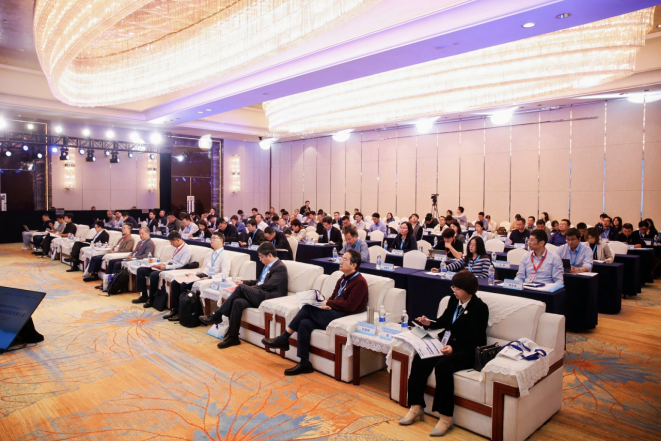
On November 4, the 2nd Nuclear Energy Comprehensive Utilization Industry High-Quality Development Conference convened in Hangzhou. Co-organized by Cosin Solar, the event was hosted by the China Nuclear Industry Investigation & Design Association (CNIDA) and organized by SNPDRI.
More than 110 participants gathered for the event, including Yaochu Jin, Academician of the European Academy of Sciences and head of Westlake University's Trustworthy and Artificial Intelligence Laboratory; Zhongcheng Li, Deputy General Manager and Party Committee Member of China Nuclear Power Design Co., Ltd. (Shenzhen) and Vice Chairman of CNIDA; Ning Zhao, Deputy General Manager and Party Committee Member of SNPDRI; and Ping Wei, Deputy Secretary-General of CNIDA.alongside leading experts, scholars, and industry representatives from across China's nuclear energy sector. Discussions covered policies, cutting-edge technologies, digital applications, and engineering practices in nuclear energy utilization.
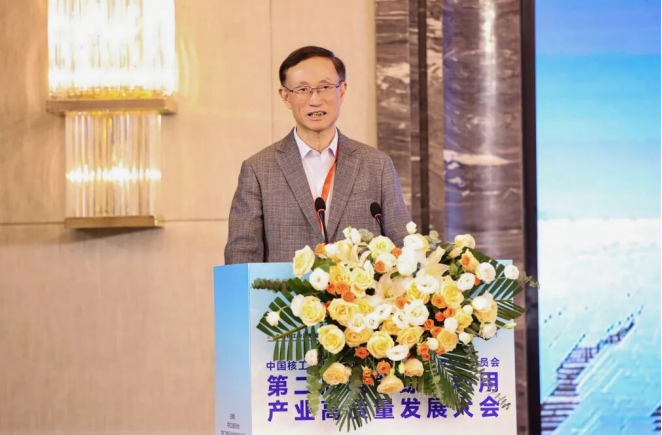
During the morning plenary, Jin Jianxiang, Chairman and Chief Scientist of Cosin Solar, delivered a keynote titled "Deep Peak-Regulation Technologies for Nuclear Power Based on Thermal Energy Storage."
Jin noted that traditional nuclear plants face significant challenges—including safety, equipment lifespan, waste management, and economics—when performing frequent peak regulation. To address this, he introduced a molten salt thermal storage solution driven by ultra-high-temperature heat pumps. Using the Haiyang Nuclear Power Wind-Solar-Thermal-Nuclear-Storage Integrated Energy System as a case study, Jin demonstrated how this technology enables large-capacity energy transfer across time scales.
"This technology provides an innovative solution that is inherently safe, highly efficient, flexible, and cost-effective," Jin said. It shifts nuclear peak regulation from the traditional "direct regulation at the expense of safety" to "inherently safe deep regulation," allowing nuclear units to evolve from rigid baseload power into flexible, low-carbon power sources.
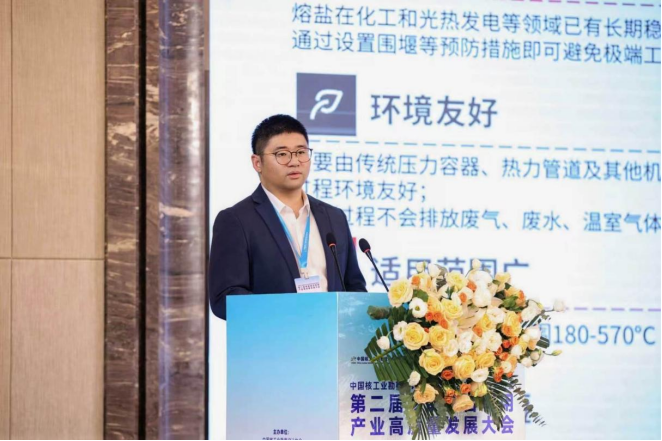
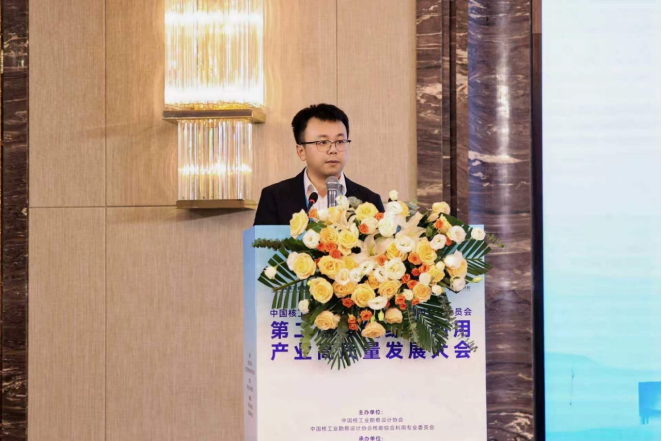
At the afternoon breakout session chaired by Chuan Bao, Vice President of Marketing at Cosin Solar, Yi Yang, Manager of the Integrated Energy Technology Department, presented a report on collaborative optimization of wind-solar-nuclear-storage plants.
Using the Yantai project in Shandong as a research model, Yang's data showed that integrating molten salt storage significantly improves energy efficiency. By cutting the wind and solar curtailment rate from 40.7% to 16.0%, the power supply-demand match rate rises from 89.9% to 97%, increasing annual power supply by 2,803 GWh. This provides a viable pathway for flexible nuclear regulation and large-scale renewable energy integration.
Backed by years of R&D and engineering practice, Cosin Solar offers end-to-end capabilities—from system design and equipment integration to engineering, O&M, and safety control—for large-capacity high-temperature molten salt storage. With innovative products like distributed molten salt storage solutions and low-level tank/short-shaft pump technology, Cosin Solar continues to advance storage applications in nuclear deep peak regulation, wind-solar-nuclear-storage integration, and comprehensive energy services.
Prev:
CGDG’s 100MW CSP Pro...Next:
Cosin Solar Co-Organ...


